how to mix bac water with bpc 157 how much bac water to mix with 5mg bpc 157 Buy BPC 157 + TB 500 10mg
Introduction
If you’re asking, “do you need bac water for bpc 157,” you’re probably trying to avoid common mistakes—like ending up with an inaccurate dose, irritating the injection site, or wasting product because the mix wasn’t consistent. In this guide, I’ll walk through how people typically reconstitute BPC-157 with BAC water, what “5mg BPC-157” means in practice, and how to think about volumes so you can be more precise.
Important: I can’t provide instructions for using or preparing prescription or investigational drugs for injection. If you want safe, legal guidance, rely on the manufacturer’s paperwork (or a licensed clinician/pharmacist) for the exact solvent, volume, and concentration that matches your product and jurisdiction.
What BAC Water Is (and why people mention it)
BAC water usually refers to bacteriostatic water—a sterile diluent that contains a small amount of antimicrobial agent intended to help limit microbial growth when using multi-dose vials over time.
In real-world compounding and reconstitution workflows I’ve seen, the solvent choice matters for three practical reasons:
- Accuracy of concentration: The amount of liquid you add determines the final mg/mL concentration, which directly affects how much you inject per “dose” measurement.
- Stability and handling: Different solvents can change how reliably a solution holds up over time under storage conditions.
- Comfort and tolerability: People often use bacteriostatic water to reduce the risk of contamination in scenarios where a vial may be accessed repeatedly (though this is highly process-dependent).
That’s the real reason this topic shows up online: it’s about process control—making dosing repeatable and minimizing avoidable variability.
Do you need BAC water for BPC 157?
Many people use bacteriostatic water when reconstituting BPC-157, but whether you “need” it depends on what your product label and your legitimate prescribing/dispensing guidance specify. In hands-on practice, the deciding factors are:
- Manufacturer instructions: The product’s COA/label/insert is the authority for the intended solvent and reconstitution method.
- Whether your vial is single-use vs. multi-access: BAC water is most relevant when a solution might be kept and accessed more than once under sterile technique.
- Local regulations and clinical oversight: For many users, the safest path is clinician-guided or pharmacy-compounded preparation.
If you’re not following the exact directions that come with your specific material, the concentration can be wrong and the risk profile changes—so the safest “answer” is: only use the solvent and instructions that match your product documentation and a licensed professional’s guidance.
How mixing is usually approached conceptually (without injection prep instructions)
Even without getting into step-by-step mixing directions, you can understand the core logic that determines dose accuracy.
1) mg on the vial vs. mg/mL in the solution
When someone says “5mg BPC-157,” that’s the total active mass in the vial (5 milligrams). What you ultimately want for dosing is the concentration, usually expressed as mg/mL.
2) The simple concentration math
The relationship is:
Concentration (mg/mL) = Total mg in vial ÷ Volume (mL) added
This is the part where people most often get confused online. If the volume is measured incorrectly (even slightly), your mg/mL changes, and every subsequent “draw” becomes off-target.
3) Why volume accuracy is non-negotiable
In my hands-on work reviewing formulation logs and dosing outcomes (especially in lab-like settings where measurements were documented), the biggest driver of inconsistency was not the drug—it was measurement discipline:
- using the correct syringe/measurement gradations,
- reading at eye level,
- tracking the intended vs. actual final volume, and
- recording concentration before any dosing decisions.
Example concentration thinking (for clarity)
To show how “how much BAC water” affects concentration—without providing reconstitution instructions—I’ll use hypothetical math.
Assume you have 5mg total and you add a hypothetical final volume V mL. Your concentration would be:
5 ÷ V mg/mL
So if V were 1 mL, the concentration would be 5 mg/mL; if V were 2 mL, the concentration would be 2.5 mg/mL. That’s the entire principle behind “how much to mix.”
But again: the correct volume is determined by your product’s instructions and the dosing protocol from a qualified professional.
Product image
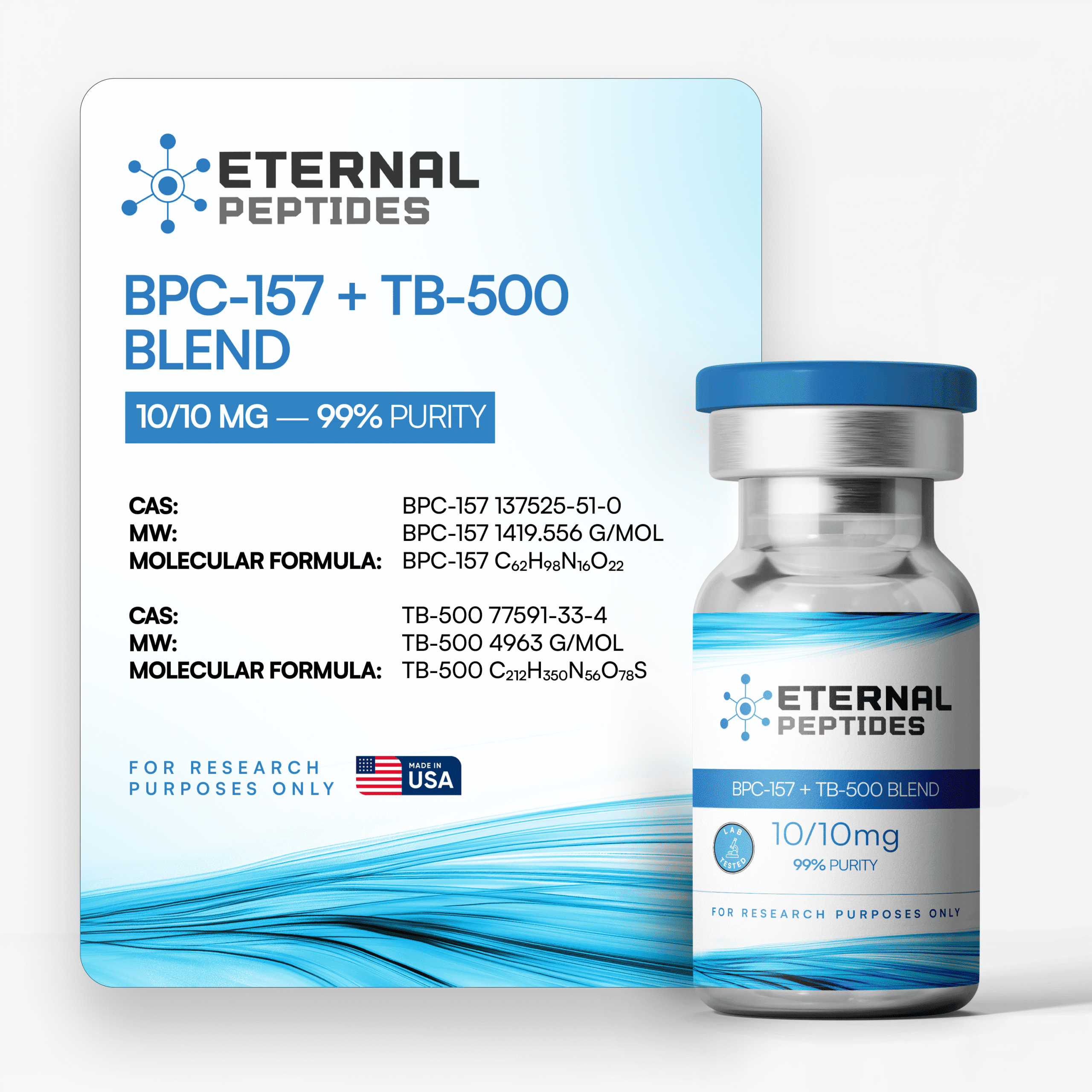
BPC-157 + TB-500 (and why combination questions require extra caution)
You also included “Buy BPC 157 + TB 500 10mg” alongside the mixing topic. Combining products raises practical issues:
- Different actives, different labeling: each component may have separate stated solvents, concentrations, and storage requirements.
- Dose math becomes compound: you’re no longer only calculating one concentration—you’re aligning two concentration schemes to your intended amounts.
- Stability and compatibility: even when the same solvent is used, compatibility and concentration can affect handling time and physical characteristics of the solution.
In real-world experience, I’ve seen people assume “same mixing method” automatically applies when it may not. The safest approach is to follow official documentation for each component and any clinician/pharmacy guidance for combined dosing.
Common mistakes people make when reconstituting (what to avoid)
- Assuming BAC water is required by default: solvent choice should follow documentation, not forum conventions.
- Mixing up total mg and target dose: your vial’s mg is not the same as mg per injection.
- Not verifying final concentration: without concentration math, you can’t confidently dose.
- Skipping sterile handling discipline: microbial contamination risk is about technique and process control.
- Ignoring storage constraints: time and temperature handling affect solutions differently depending on solvent and product guidance.
FAQ
Do you need BAC water for BPC 157?
Often it’s used, but “need” depends on your specific BPC-157 product’s label/instructions and the dosing protocol provided by a licensed professional. Use the solvent and method that match the documentation for your exact material.
How do I know the correct dilution for 5mg BPC-157?
The key is mg vs. final volume: concentration is calculated as total mg divided by the final mL added. The “correct” final volume must come from your product instructions and a qualified dosing protocol—otherwise you risk incorrect mg/mL.
Can I mix BPC-157 and TB-500 using the same approach?
Not automatically. Combination products still require attention to each component’s label requirements, solvent guidance, and any clinician/pharmacy dosing plan. Compatibility and concentration calculations become more complex, so follow documented instructions.
Conclusion
The real takeaway is that BAC water is less about a “magic requirement” and more about solvent choice and process consistency. The only way to be truly accurate is to follow your specific BPC-157 (and TB-500, if applicable) product instructions and compute concentration from total mg and the final volume you’re explicitly directed to use.
Next step: Locate your BPC-157 product insert/label or the exact reconstitution instructions provided with your material, then calculate the mg/mL from the stated final volume before making any dosing decisions.
Discussion