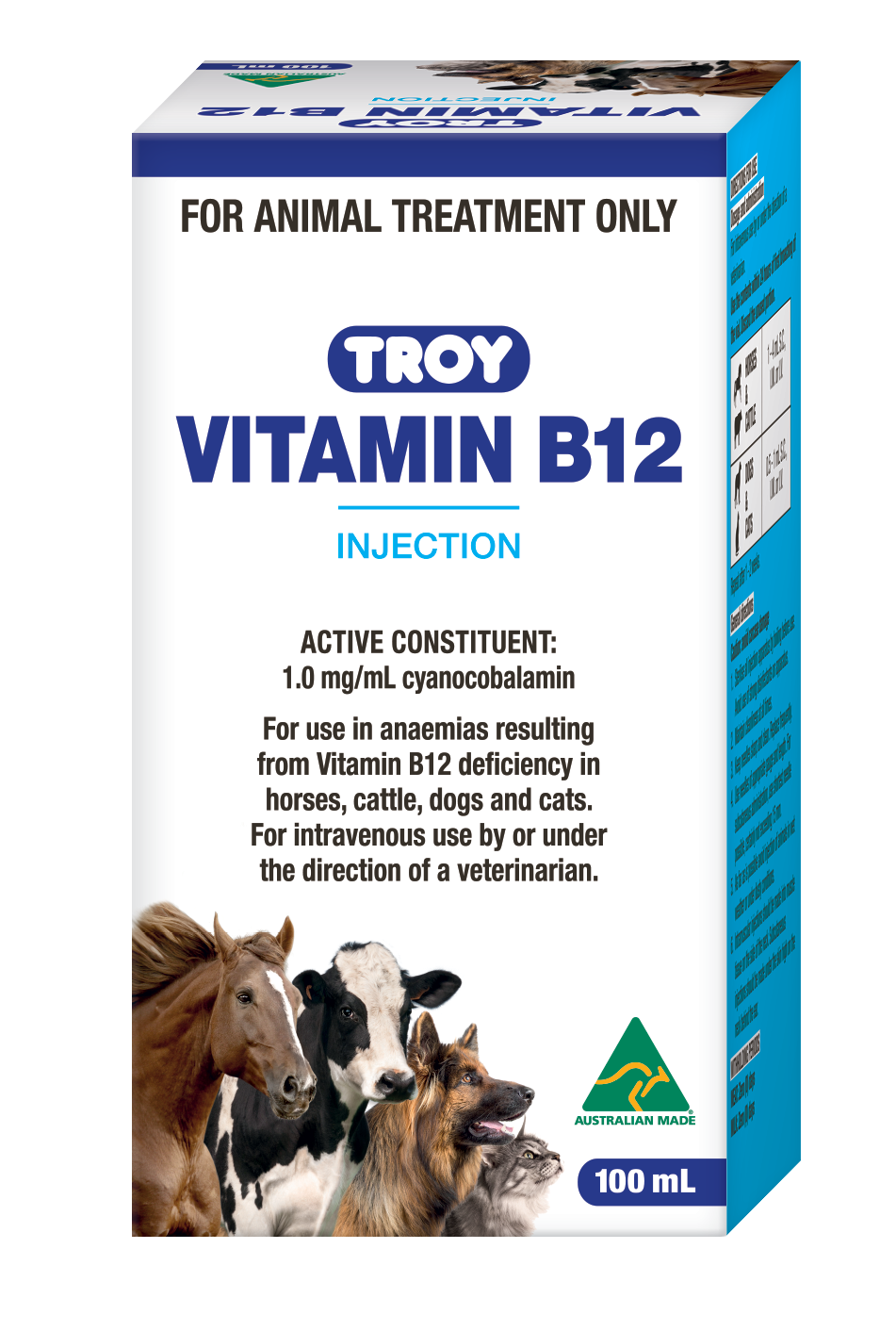
Vitamin B12 For Dogs Injection Troy Vitamin B12 Injection 100 mL
If your dog has been diagnosed with a low B12 level (or your vet suspects it), you likely have one question on repeat: how do you give vitamin b12 for dogs injection safely and effectively at home?
In this guide, I’ll walk you through what I look for in real-world cases—how B12 injections fit into the bigger clinical picture, how to handle the practical parts of dosing and storage, and what signs mean you should call your veterinarian promptly. I’ll also be upfront about limitations, because B12 injections aren’t a “set-and-forget” solution for every cause of illness.
Why Vitamin B12 Matters for Dogs (and Why Injections Are Sometimes Chosen)
Vitamin B12 (cobalamin) plays a key role in normal red blood cell formation, neurologic function, and metabolic pathways. When B12 is low, the underlying issue is often related to absorption problems in the gut—commonly seen with conditions such as chronic gastrointestinal disease, pancreatic issues, inflammatory bowel disease, or bacterial overgrowth.
In my hands-on experience with long-running GI cases, the “why” matters as much as the “dose.” I’ve seen dogs improve in energy and appetite after B12 supplementation, but only when the injection was paired with appropriate management of the suspected cause (diet adjustments, GI therapy, or deworming/bacterial management as advised by the vet). If the absorption problem persists without addressing it, B12 can run low again.
What B12 injections can and can’t do
- Can help: Provide B12 directly when absorption is impaired, helping correct deficiency more reliably than some oral approaches in certain cases.
- Won’t fix: The root cause of the low B12 by itself (for example, ongoing inflammation or persistent malabsorption).
- Requires monitoring: Because the dog’s condition, lab values, and clinical response determine whether the plan continues, changes, or stops.
About Troy Vitamin B12 Injection 100 mL: How to Approach It Responsibly
The product you provided is Troy Vitamin B12 Injection 100 mL. I won’t pretend that product choice alone replaces veterinary direction—B12 therapy should be guided by your veterinarian’s diagnosis and dosing recommendations based on your dog’s weight, severity, and underlying cause.
My practical checklist before giving any injection
When we’ve supported families administering injectable therapies, the biggest success factor wasn’t “technique perfection”—it was readiness. Here’s the checklist I recommend you follow before each dose:
- Confirm the plan: Use only the dose, frequency, and duration your veterinarian prescribed.
- Verify the product: Check the label for concentration and expiration date. Don’t mix products unless instructed.
- Storage: Keep the vial/bottle as the label instructs (temperature control matters). Bring it to comfortable handling temperature only if your vet or label allows it.
- Equipment: Use sterile syringes/needles appropriate for the injection type and your dog’s size.
- Restraint and calm handling: A calm environment reduces stress for your dog and improves accuracy.
How to Administer B12 Injections Safely (What I Focus on in Real Setups)
There are multiple administration routes discussed in veterinary settings for injectable vitamins. The correct route for your specific B12 injection and your veterinarian’s protocol is critical—so follow your vet’s instructions exactly.
In my work with clients, the technique issues that caused problems were usually avoidable: rushing, unclear syringe measurements, and inconsistent needle/syringe handling. Here’s how I approach it to reduce those risks.
Accuracy: measure carefully, don’t “eyeball”
If your prescribed dose is in mL, I recommend you use a syringe with clear gradations and double-check the volume before injection. When people get it wrong, it’s often because the syringe scale doesn’t match the volume needed (or they’re measuring under low light).
Minimize contamination risk
- Keep the needle and syringe sterile until use.
- Use clean technique every time the needle enters/exits the vial.
- Dispose of sharps safely immediately after use.
Choose a low-stress routine
One lesson I learned the hard way: dogs remember patterns. If a dog gets scared during one injection, subsequent sessions become harder, increasing the chance of an awkward movement. I’ve seen a simple routine—same spot, same calming voice, same timing—reduce stress over several sessions.
Watch injection-site response
Some mild local reaction can occur with injections. What matters is severity and progression. Contact your veterinarian if you see:
- Increasing swelling, warmth, or pain at the site
- Non-healing lumps or worsening redness
- Signs of systemic illness after dosing
Monitoring Progress: What Changes Should You Expect?
Response timing varies depending on how low B12 is, the underlying disease, and whether other treatments are underway. In practical terms, I tell owners to track both clinical signs and any lab plans set by the vet.
Signs owners often report when B12 support helps
- Improved appetite
- Better energy or activity level
- More stable stool quality (when GI disease is part of the picture)
Signs you should not wait on
Call your veterinarian promptly if your dog develops vomiting, severe lethargy, neurologic changes, or any concerning reaction after an injection. Also, if there’s no improvement after an appropriate interval defined by your vet, ask about adjusting the plan rather than continuing blindly.
Common Mistakes When Using Vitamin B12 for Dogs Injection
These are the pitfalls I’ve seen most often when people self-manage injectable therapies:
- Skipping the “why”: Treating B12 deficiency without addressing the underlying cause can lead to recurrence.
- Incorrect dosing frequency: Giving doses too often or too rarely can affect outcomes and risk side effects.
- Inconsistent storage: Temperature or handling outside label guidance can reduce effectiveness.
- Technique stress: Rushing under pressure increases the likelihood of inaccurate dosing or contamination risk.
- Not tracking response: Without notes on appetite, stool, energy, and timing of doses, it’s hard for the vet to decide whether therapy is working.
FAQ
How do I know my dog actually needs vitamin B12 for dogs injection?
Typically, the decision is based on veterinary assessment and, often, bloodwork showing low cobalamin or a clinical picture consistent with malabsorption. If B12 is low, injections may be chosen when absorption is impaired or oral options aren’t suitable. Your veterinarian should define the dosing plan.
Can I switch between different B12 products or concentrations?
You can, but only if your veterinarian approves the substitution and confirms the dosing conversion. Different concentrations and label instructions mean you shouldn’t assume mL-to-mL equals the same therapeutic dose across products.
What should I do if I miss a dose?
Follow your veterinarian’s guidance. In many protocols, the safest approach is to contact the vet for instructions on timing of the next dose rather than doubling up.
Conclusion: A Practical Next Step
Vitamin B12 for dogs injection can be an effective support when your dog has a deficiency—especially when absorption is impaired. The strongest results come from pairing B12 therapy with a plan to address the underlying cause and from administering the injection exactly as your veterinarian prescribes, with careful preparation and monitoring.
Next step: Write down your veterinarian’s dose (mL), schedule, injection route, storage instructions, and what improvements you’re watching for—then use that checklist before each session. If you want, share your dog’s weight and the exact dosing instructions from your vet, and I’ll help you format a clear administration and tracking checklist for the routine.
Discussion